In late September, Robin O’Neill dropped me a note. We’ve collaborated in a host of wonderful ways over the years – I admire her work so much – and she’d been shooting some images in my neck of the woods, at Rootdown Organics. Simone McIsaac had said, “not all salad greens are the same”, and Robin’s creative brain thought “that’s a story.” I was pretty burned out of writing freelance, and for magazines, to be honest, so I referred her to another local writer, and offered to introduce her to Barb, the new-ish editor at Edible Sea to Sky, and then the wheel of the year turned and we were all still talking about it, and I thought I’d go pay Simone a visit. She inspired me with her outsized energy and passion, and she sent me home with a crate of food, and instead of feeling overwhelmed and overharvested, as writing-for-hire during late stage capitalism has sometimes felt, I felt tended-to and as if some little shoots of curiosity and excitement were sparking up inside me. Sending Robin my ideas for visually telling the story, transcribing the interview and revisiting an amazing conversation, emailing back and forth with Barb, looking through Robin’s images, was all refreshingly enjoyable… and then yesterday, I got a beautiful note from Simone, saying, she was eating salad and reading the article in Edible, and she wondered if I could come by and collect some veggies as thanks. She sent my husband-delivery-servant home today with a HUGE bag full of fresh salads, greens, radishes, hakurei turnips. Proof of her and her team’s skill. My garden right now, despite days of weeding, is still, mostly, weeds, and little spots that I gaze at wondering if some seed shoots might spring forth that is recognizably a plant I want to grow, rather than a sneaky little compost seed stowaway. Simone’s crew are harvesting lush kale and full grown beets, and I do not know how they do it, and I am so grateful for their hard work and intelligence, and this gesture of appreciation.
Simone signed off her email:
“It certainly feels like summer time has arrived around the farm. The crew is in tiptop shape, and the veggies are eager to grow in these long days.”
You can read the article at https://edibleseatosky.com/2026/05/28/salad-days-of-summer/, pick up a copy throughout Sea to Sky in all your favourite foodie outlets (I grabbed mine at Mount Currie Coffee Co), or read it below. And follow Rootdown at https://www.instagram.com/rootdown_organic_farm/ if you want to see how the pros do it, and Edible Sea to Sky at https://www.instagram.com/edibleseatosky/ for more lovely local yumminess, including recipes, and stories from Dee Raffo, Katherine Fawcett and bronwyn preece.
FIFTY SHADES OF GREEN
Simone McIsaac had a problem. For the owner and operator of Rootdown Organic Farm, finding workers every season was hard because she could offer only six months’ worth of work. Her solution was to find a crop to even out the peaks and valleys of the growing season so that farmhands’ contracts weren’t so short and intense. But what crop would flourish through the shoulder seasons and let her keep staff on for 10 months a year?
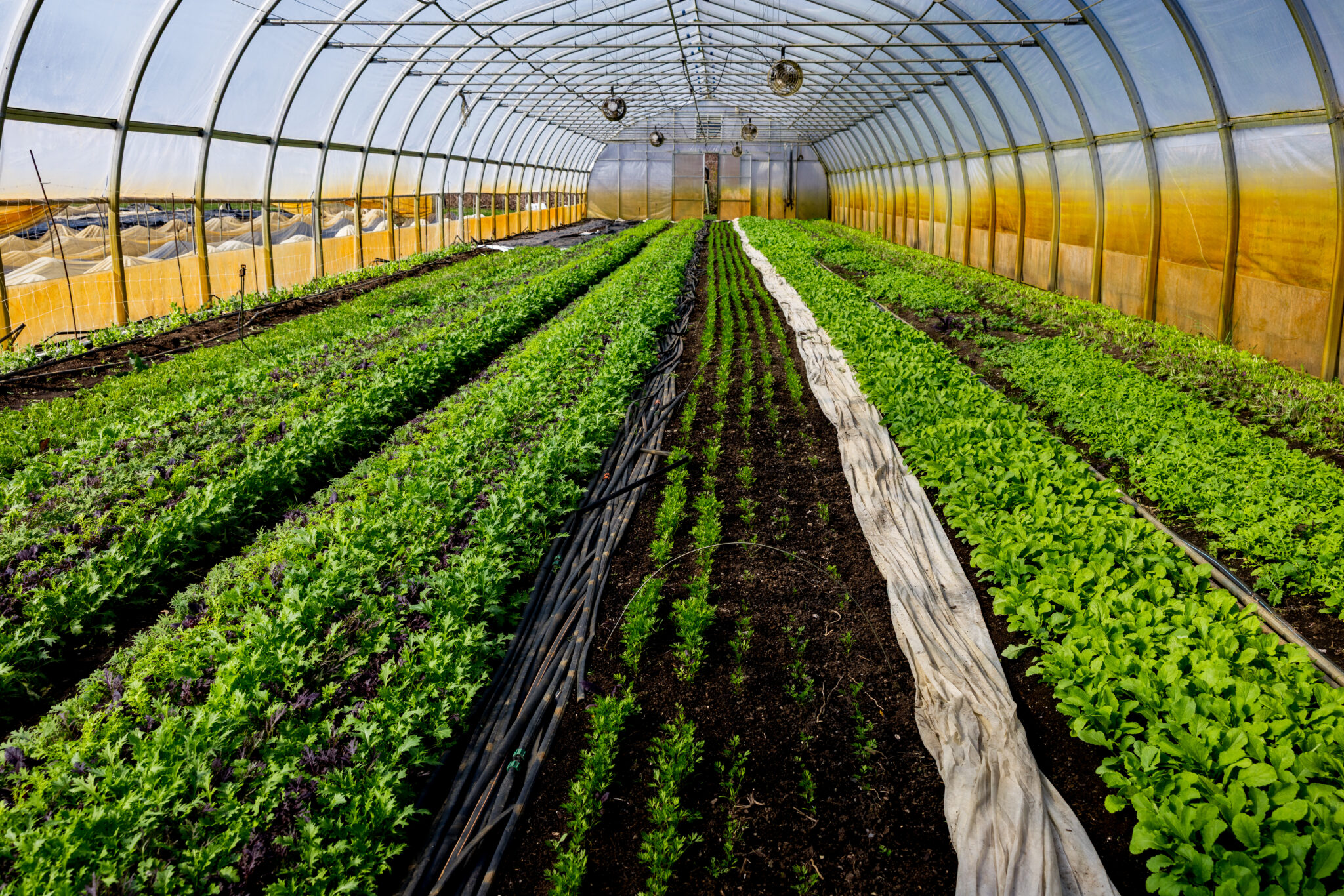
The answer was wrapped in plastic. A polytunnel, to be precise, on her one-acre homestead in Pemberton Valley near the farm. Inside the plastic: mixed salad greens. A crop she could place in the centre of a complicated Venn diagram of attractiveness, value, nutrition, growth to maturity, soil support and yield.
It has worked. This season, most of Rootdown’s nine employees are returning, which means the farm starts ahead of the curve, with muscle memory and built-in crop knowledge.
Not that this is a guarantee of anything else staying the same. “It’s a dynamic thing, a farm,” says McIsaac. “It’s the complete opposite of stepping into a climate-controlled office nine-to-five.” The only constant is the utter dependency on daylight. “The sun moving through the sky dictates everything we do.”.
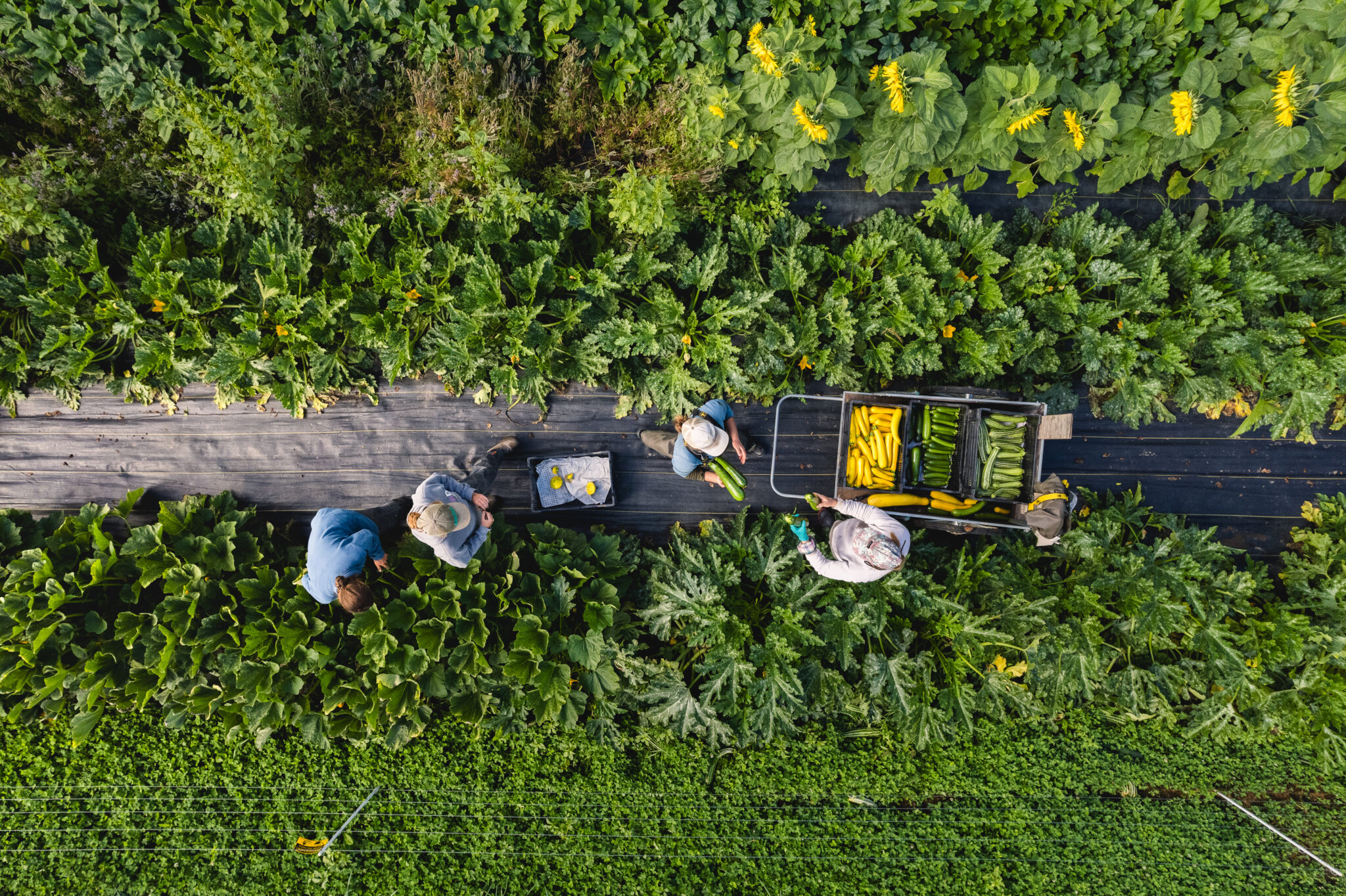
Rootdown is a small six-acre certified organic farm celebrating its 17th year. Founded by fellow UBC Farm grad, former farmer and ongoing landholder Sarah McMillan, it has evolved into McIsaac’s operation, growing and maturing alongside her family: partner TJ Reaves and 11-year-old daughter Marisol. The farm grows a huge range of organic vegetables — including garlic, carrots, celeriac, beets, radishes, hakurei turnips, tomatoes and kale — for direct sale to restaurants and grocery stores, as well as their now-signature bags of mixed greens.
The intention was never to farm at her home, a one acre duplex property 10 km away from the main farm. “It’s sandy, well-drained, land that was overgrazed as horse pasture,” she says. But a farmer’s brain never stops, so it wasn’t long before MacIsaac was making a case for on-site greenhouses and tunnels for high maintenance summer crops that need constant ventilation management. “They say, when you build your greenhouse, put it on your best soil. But we put it on the worst soil of the whole farm, because it had the best light.”
The salad would be the solution.
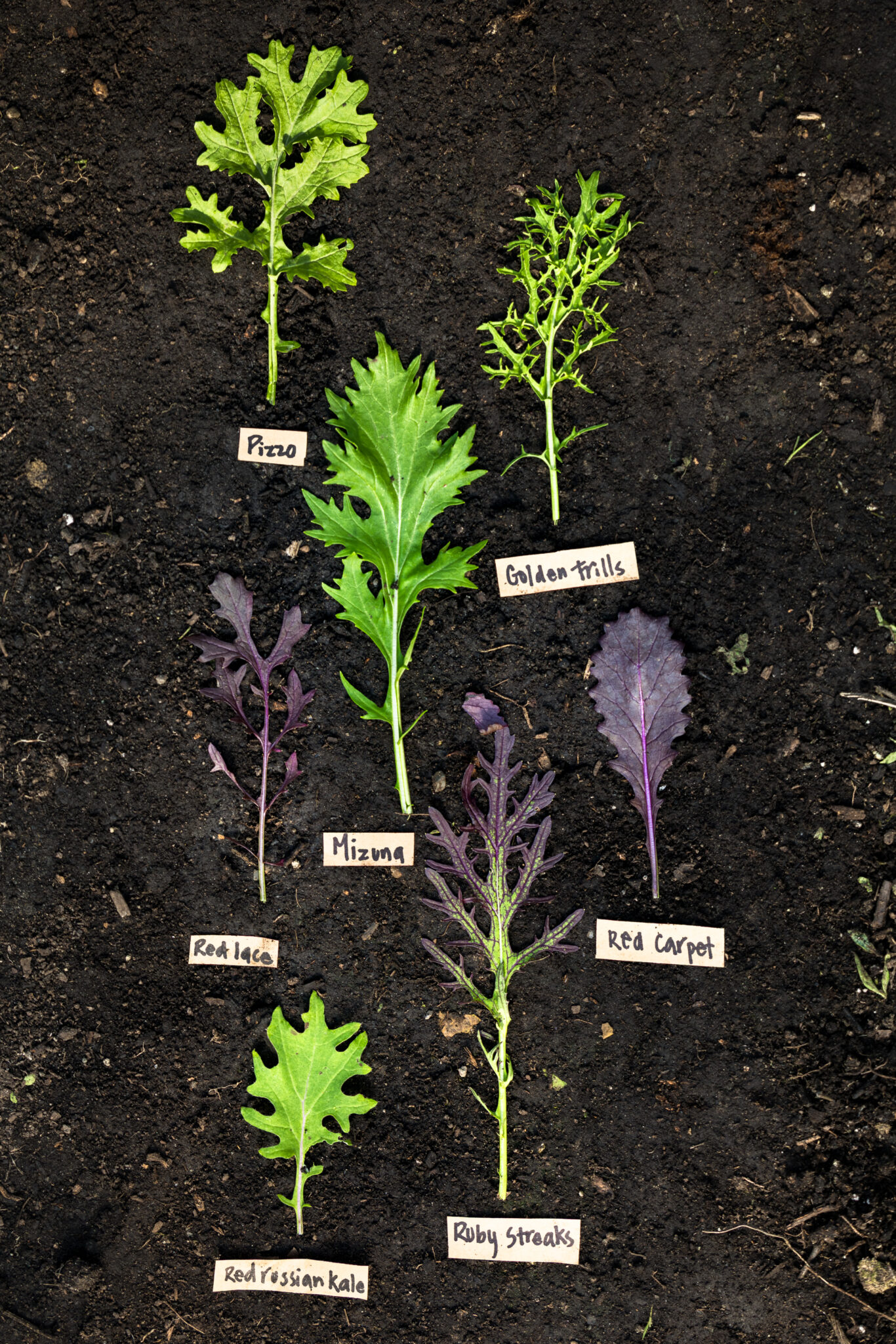
Baby kales, mizuna and mustards have a super high turnover in the summer, when Pemberton’s infamous heat turns the growth hormones up to ninja level. “We seed, they pop out of the ground within four days, and we’re harvesting three weeks after that. We harvest that generation for one or two weeks, then weed whack it, tarp it, and two weeks later, we seed right back into it.” Cover cropping with a high-succession crop produces a significant amount of biomass that can go right back into the soil, and this has turned McIsaac’s field from a sandy overgrazed horse pasture to a thriving earthworm-juicy zone. In just six years.
The finely tuned system is not only good for business and the soil. It’s also a win for the salad connoisseur — because you can’t fake fresh when it comes to greens. They’re not shelf-stable, as anyone who has waded through a newly opened but slimy box of store-bought salad can attest. The DTM (farmer code for “days to maturity”) of baby greens is fast, and their demise, once picked, is equally fleet. The trouble with the “artisanal” greens in that box is that they’ve been shipped from California and Mexico, and no amount of cheerful “farm fresh” labelling can claw back those days in transit.
Greens, those little nutrient powerhouses, should be bought and consumed as close to their field of origin as possible. They’re tender little babies and not meant to be world travellers.
Farming is McIsaac’s second career. A former outdoor educator with a biology degree and a love for natural systems, she spent 10 years travelling to beautiful mountains to work before craving a place to put down roots. Motherhood as a working farmer, with a baby napping in the germination chamber or playing in the earth beside the crops, taught her how to prioritize. “If you have a young child who’s dependent on you and you also have all these baby plants, you get done what you need to get done and walk away, because you need to go be a mom. It teaches you to let go.”
This season, after 10 years of supplying families with a community-supported agriculture (CSA) subscription, she made the call to let go of Rootdown’s weekly harvest box, simplify some of the mixed vegetable crops and double down on the salad greens.
“I love the CSA but I am striving for life balance — for myself and the team. It was needed.” A collaboration with Naomi Martz of Four Beat Farm will put Rootdown salad in the Four Beat CSA. The greens will also find their way to your salad bowl via a network of Sea to Sky grocery stores. This new distribution will add a few more packaging steps for the team, but will also give McIsaac the chance to get even better at what she does: finding solutions and growing outcomes that are win-win-win — for the farm, farmers and the future.
Find Rootdown greens in Pemberton at Pemberton Valley Supermarket, Stay Wild, North Arm Farm, Helmer’s Organic Farm Stand and HappiLife Farm Stand and in the Four Beat Farm CSA; in Whistler at Fresh St. Market, Nesters and Creekside Market; and in Squamish at Stong’s and Nesters.


💕💕. Sent from my iPad