Keita, the Pemberton Arts Council’s Programming Coordinator who is leading up a beautiful local workshop series, and I, were at the same all-day business planning session, so we tucked ourselves to the side for a moment, to jam on the specifics of my offering to host a workshop.
The workshops are this gorgeous grassroots celebration of local talent that emerged at a time when people are craving low-cost, low-barrier, sober, third spaces. Keita has rounded up a range of local venues, from the Community Centre to the Museum to the Village Yoga studio, where people might come together, for “creative workshops and skill-building.” It’s been the sweetest excavation of the neighbourhood, to experience guitar playing with Sue Stearns, needle-felting with Clea Thomas, colour therapy with Angela Waldie, social media strategy with Tanitha Rempel, screen printing with Melisse Carron… (They also hosted salsa dancing with Elena Aranguren, watercolour with Keita Selina and songwriting with Sheri Marie Ptolemy is coming up.) I’ve signed up for a bunch, either for myself, or my partner and I as a date night, or for my kiddo and partner… because it feels good to sample different modalities of self-expression and meet people in their passions and expertise.
I’ve hosted dozens of journaling workshops over the last five years, and love offering prompts and space and encouragement for people to get scribbly. But I had a different idea to run by Keita for the workshop I was going to offer as part of the series. I was creatively stumped in the face of a larger ambition, and simply didn’t know how to get started. “I think I need to understand Resistance,” I told her and I pitched the idea of something that wasn’t just about writing prompts, but playful, reflective, hands-on, blending movement, mark-making, meditation, and journaling, to explore Creative Resistance and how we can get out of our own way.
“I’m not an expert on this topic,” I confessed to her, falling back on the age-old thing that women do, starting to eliminate ourselves from a gig because we don’t yet have six PhDs in the field and all its related disciplines.
“Is there energy in the topic for you?” she asked.
“Ooh, yes.”
“Well, there’s no better way to learn about something than by getting ready to teach it.”
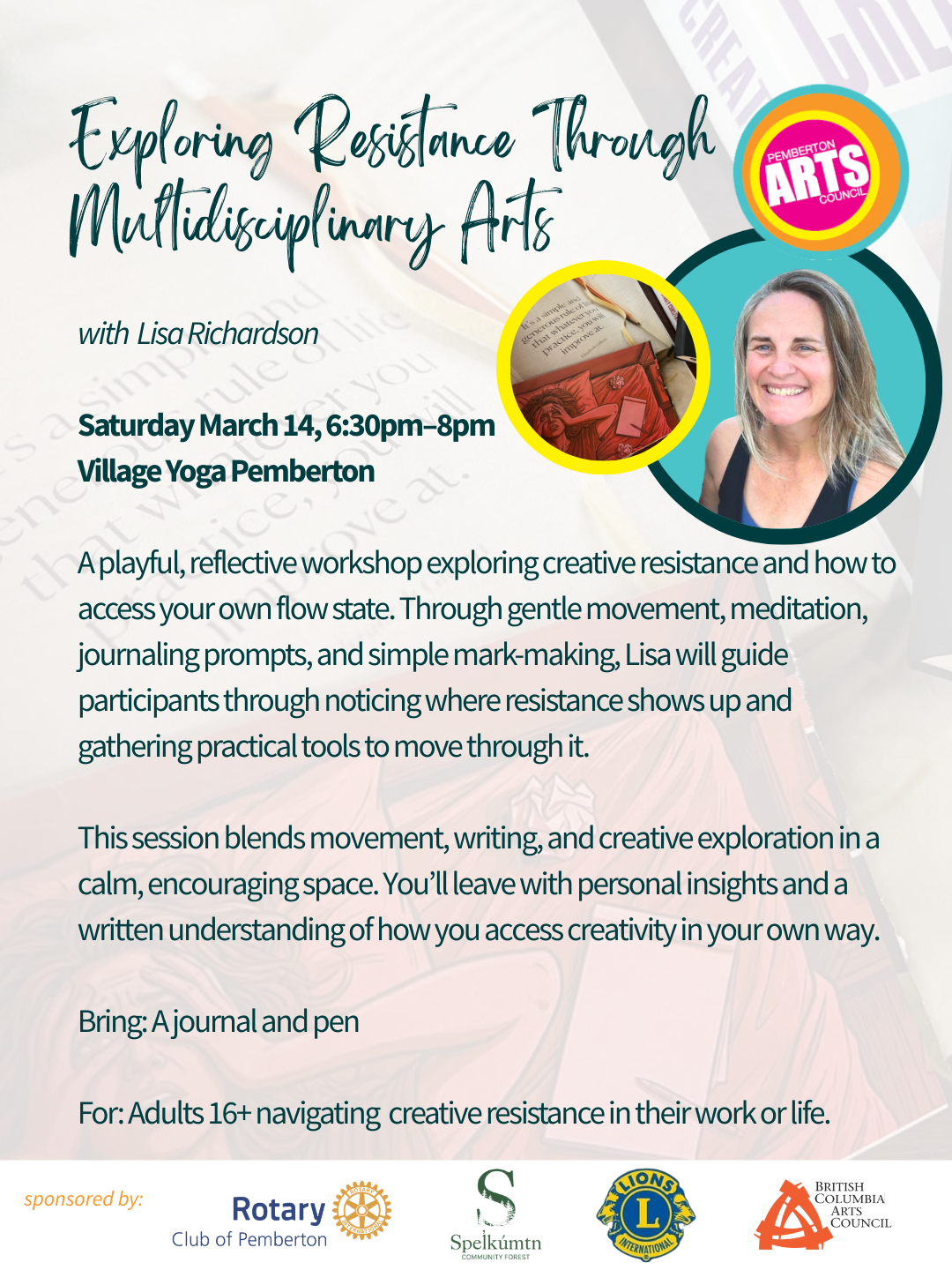
So with that beautiful blessing, I signed on and dived in to a six week exploration in Creative Resistance. I feel deep gratitude to Keita, who is a deeply creative person, an artist, singer and vocal coach, and who played the midwife role for this project, handling logistics, marketing, and all the things that can stump a person who is trying to be-it-all and do-it-all. This was my absolute biggest takeaway from the whole inquiry, and if you read no further, please absorb this to the bottom of your soles. We’re not meant to go it alone. Also, so much gratitude to the dozen folk who signed up and came out to play and share and their secret hearts and some of the things they struggle with, and willingly play along with all manner of weird prompts. It was such a fun night, and the most fun thing of all was the experience of being enfolded into a community of creatives. Not for networking or professional high-fiving, but for play and support and laughs.
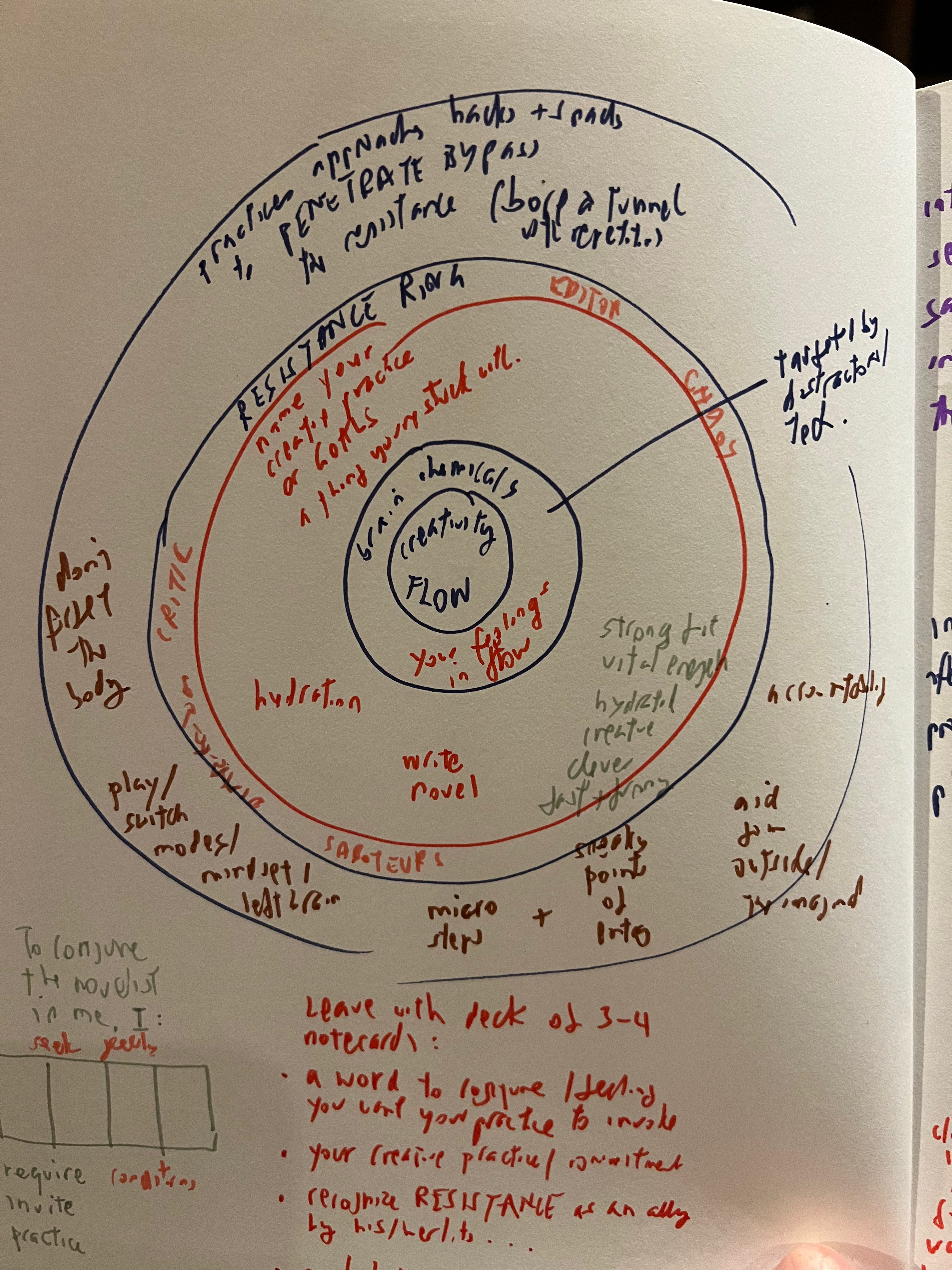
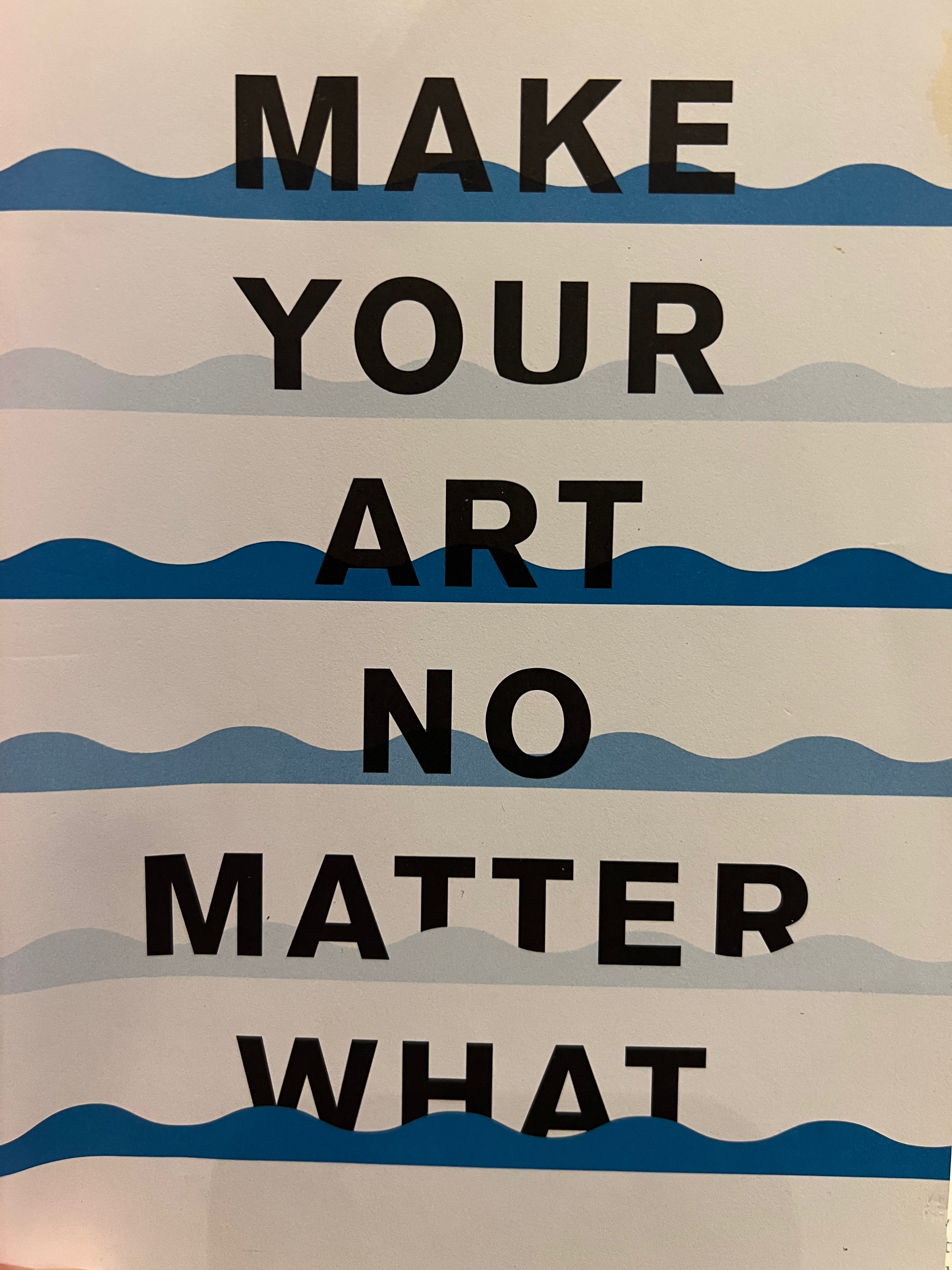
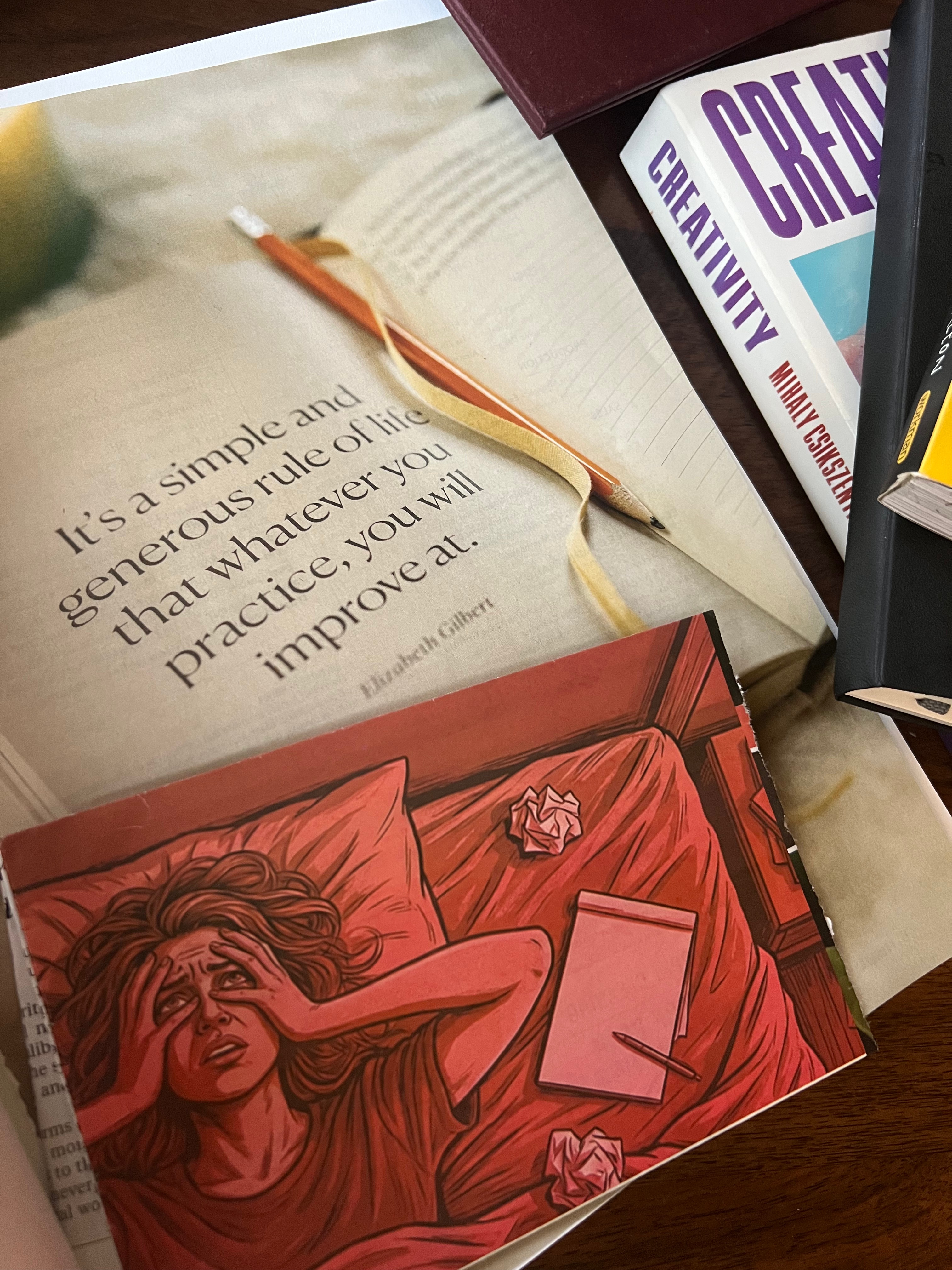
Here’s an arbitary list of six things I learned about resistance while preparing for the workshop, (because one of the things I learned is that lists can trick you into getting started. They’re a type of container, and containers are what we need in order to channel the vastness of all possibility into some kind of manageable shape. A canvas is a shape. A spreadsheet is a shape. So, too, a list. Arbitrary because if you asked me again tomorrow, I’d probably come up with 6 different things. All of which to say, there’s no formula for getting creative and navigating resistance, but there are a lot of numbers and Greek letters that you can arrange and re-arrange to look like one that feels like an aha-I’ve-cracked-the-code for a little while, and just might rearrange the space-time continuum for you. We can only hope.)
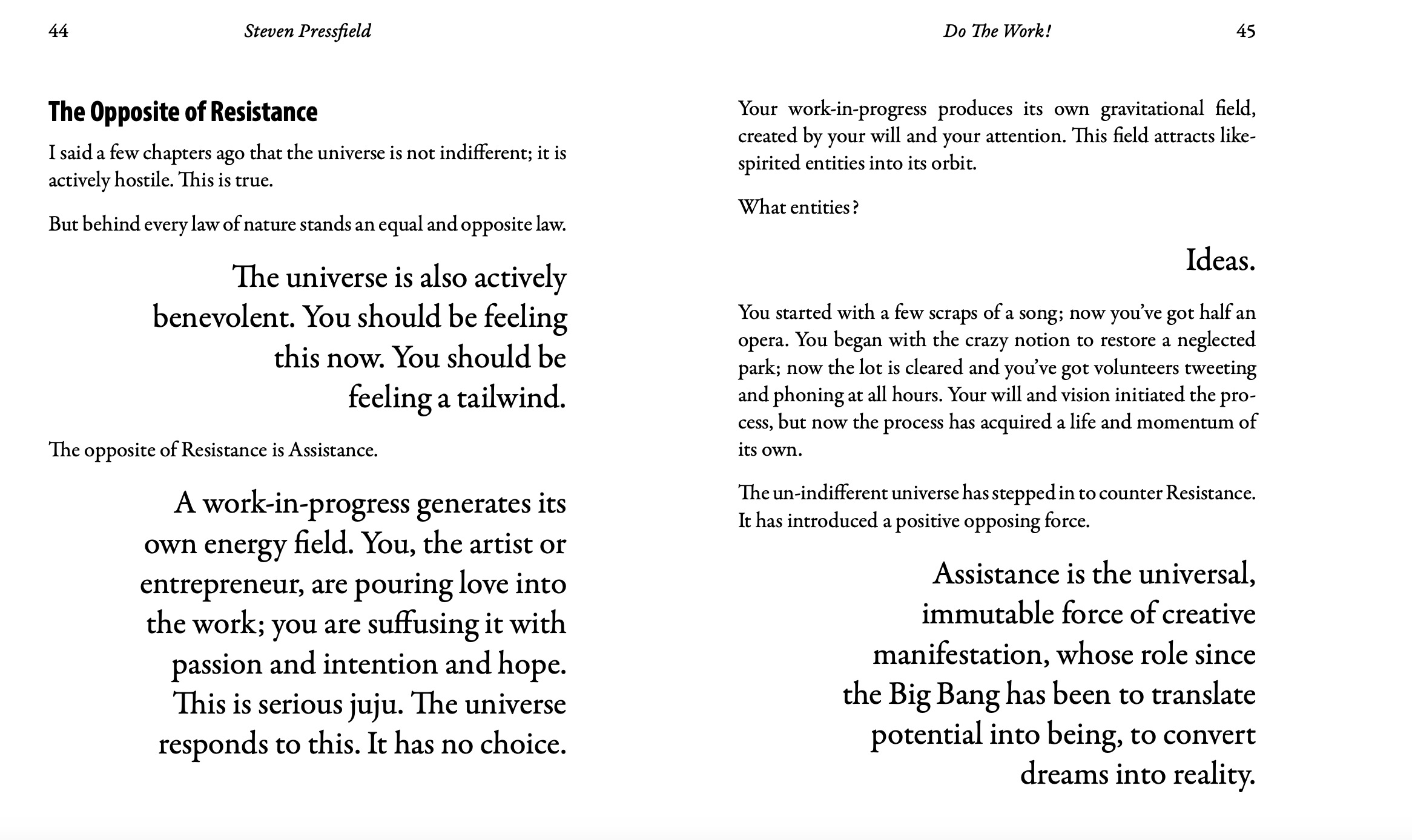
- It is not a personal failing, but it is very personal, when you get blocked, stall out, stop creating. Resistance shows up uniquely for every person with a special customized flavour profile, like a freaking algorithm. Steven Pressfield conceptualizes it as a force, that is almost sinister, actively targeting you, to try to prevent you from doing the work that your highest self would have you do.
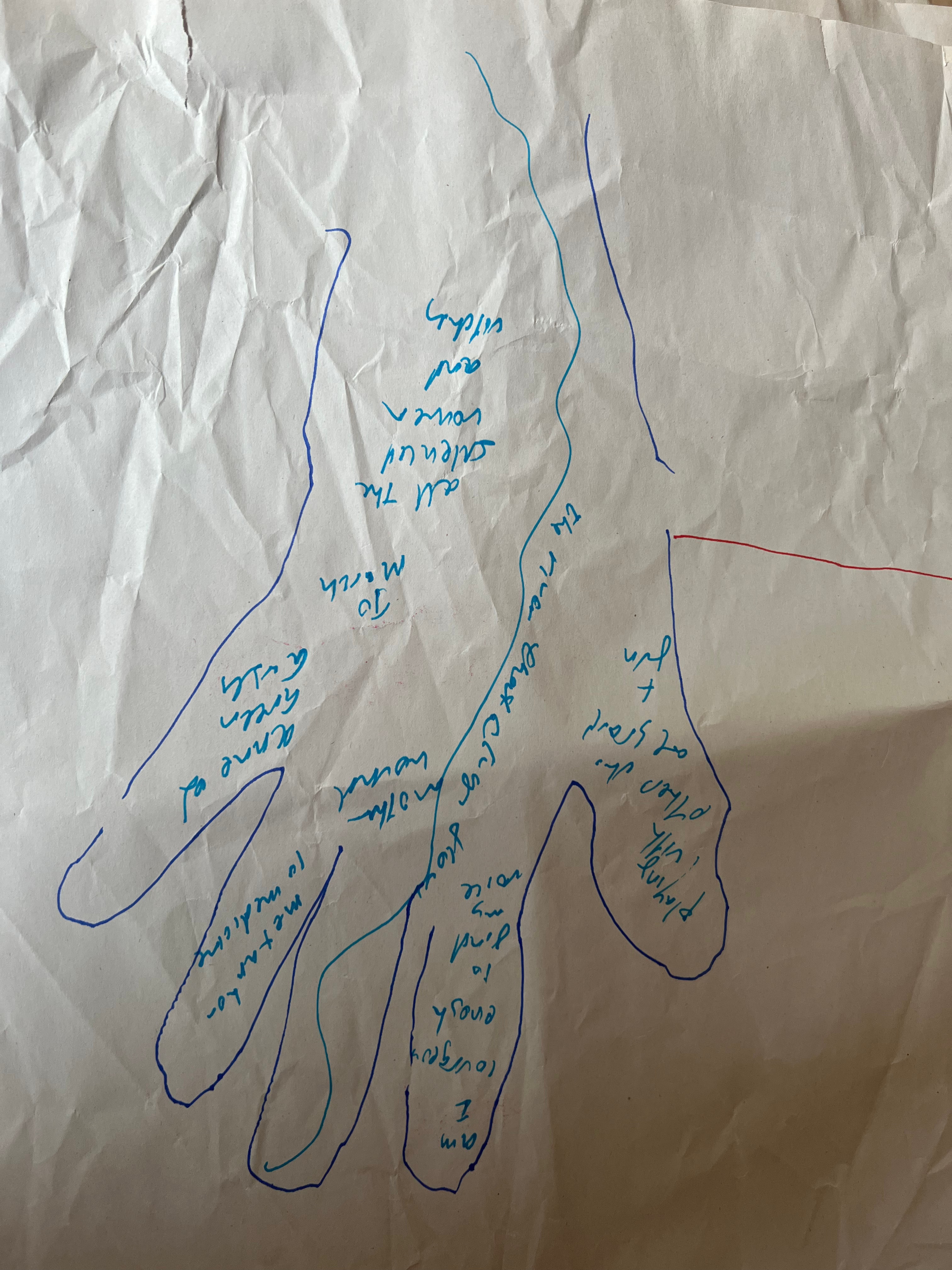
2. Your creative imprint or handprint, ie the things that rule and fuel and inform and have shaped your creative expression, are as unique to you as your fingerprints and your voice print. You are the only person who can make the art that you will make. Even if it’s the same medium as millions of other talented people. Making art in some form, whatever your forms of self-expression are, and having a practice of some kind, is a way to be in relationship with your self… and that is the longest relationship you’re going to have, out of anyone else on the planet, over the course of your lifetime. So you might as well nourish it. Connecting your creative courage, which fluctuates over time, to your creative self, which evolves over time, is worth doing. Make the connection. Make it visceral, visible, tangible. Tend to it. See what grows. See what it shows.
3. Whatever you notice, is welcome. Start with noticing. What do you notice? But noticing is different from focussed action… so honour the funnel and your attention. Don’t let all the noticeable things up there at the top of the funnel of your awareness, out in the periphery, become distractions. In the same way that a sales funnel works to eventually move you towards a commitment by exposing you to multiple messages and touch points, move yourself towards commitment, towards something you’ve noticed. Like, what I’m saying is notice things, but then pick one, commit, stop scrolling and lock in. (Yes, this is about social media and the interweb and its dangerous seductions for creative people. Use it for inspiration, but beware the infinite scroll. Sometimes real life has more to offer than the infinitudes of your device.)
4. It can be hard to bring an idea into being, until you decide what shape it should take. Literally ask what is the best container for it, at this moment? Sometimes, this means experimenting with very modest scrappy containers – we made zines in our workshop so people could craft some personalized guides to their own resistance. I used old school notecards to put the workshop together. These were themselves prototypes, iterative containers, that were of a manageable size to contain 6 weeks of research, thousands of little notes to self everywhere, lots of thoughts and neuroses, and possibly the seeds of a book-length project. To begin, first, we need something tangible. We need to bait our hooks. We can start with an intention, a one word spell, to call things towards us. We can start with a blank card, something that will hold the first iteration of work. Out of the vast Everything, we are pulling something into being. Get a small vessel. A time limit. A page count. A format. Lists are good for warming up, and they are weirdly satisfying to our nervous systems, (see : all long form writing vanished to make way for listicles, because we can feel like it’s accessible and accomplished.) It helps us bullet point before things start to flow.
5. All creating is embodiment work, so pull the body into your practices. Breathe. Sit still and comfortably. Practice wakeful rest. Or doing nothing. Dance. Do downward dog or child’s pose. Transcribe out a favourite quote or draw circles. Down regulate. Up regulate. Co-regulate. Find the gestures, shapes, and playlists that work for you, a repetoire of things that signal GO, STOP, rest, inviting in, gearing up…
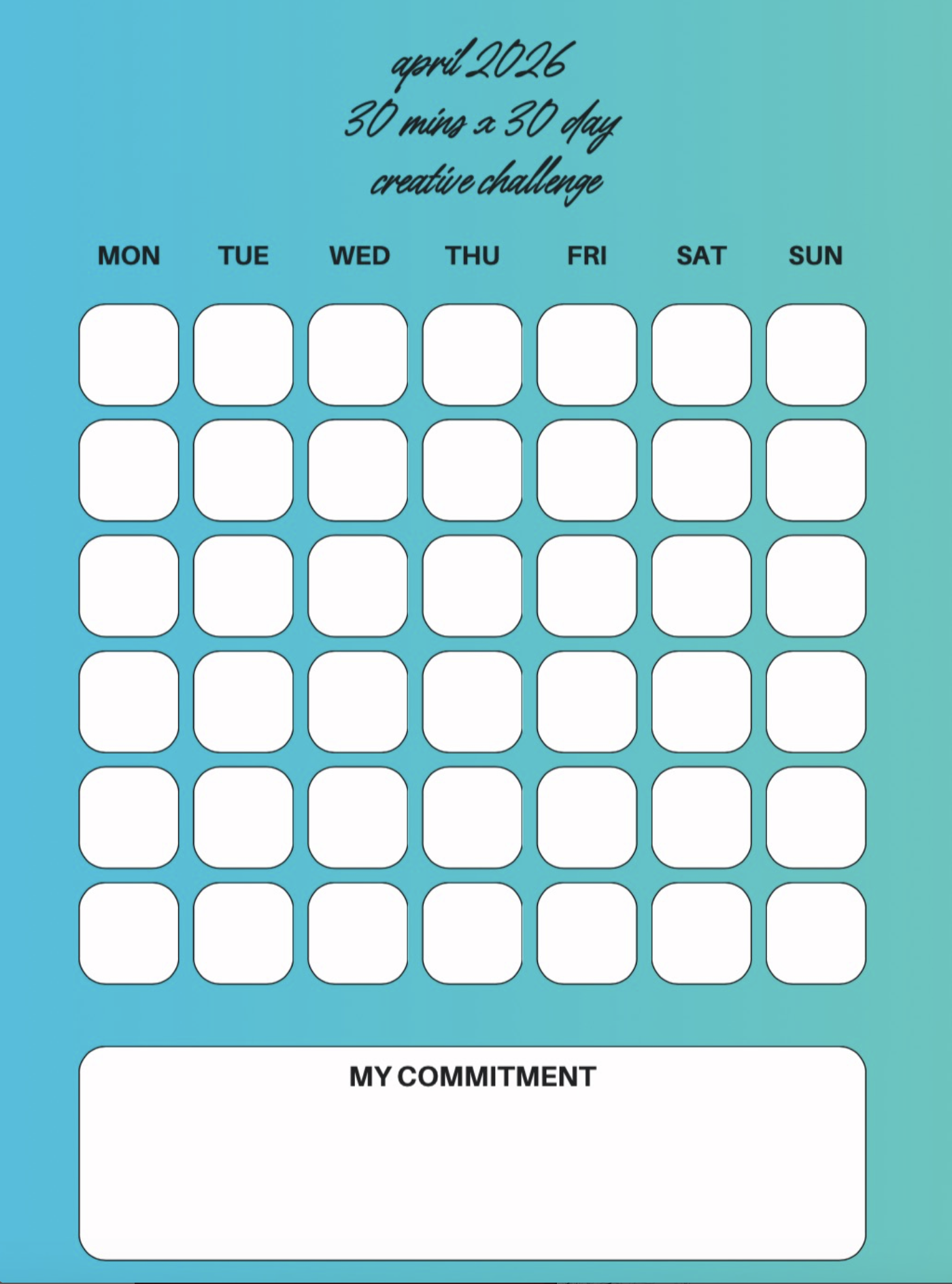
6. And now after all that theory, it’s time to put it to the test. April is a magical month because it’s springy and because it has 30 days, which is a random differentiator from 75% of the rest of the year. It allows for the creation of a catchy little 30 by 30 challenge… to undertake to do 30 minutes of a particular goal, every day for 30 days. (Or some personalized variation.) So, I’m going to use that as a container, a goal, an accountability, and attempt to write some pages.
How about you?
Here’s your container, if you’d like to play along. Enlist a friend. Accountability and encouragement is helpful. It feels incredibly vulnerable to confess your secret goals or ambitions or hopes to someone, so choose carefully, and ideally they too have something brewing for themselves, and you can cheer each other on.
Further reading for fellow Resistance geeks:
Steven Pressfield The War of Art
 Lisa Richardson Bylines