I have a horror for monoculture and monopoly. (I believe that diversity seeds resilience.) Professionally, I have loved being able to lift up the kind of people who make my little piece of the world better – quirky, flavoursome, interesting, unique, richer.

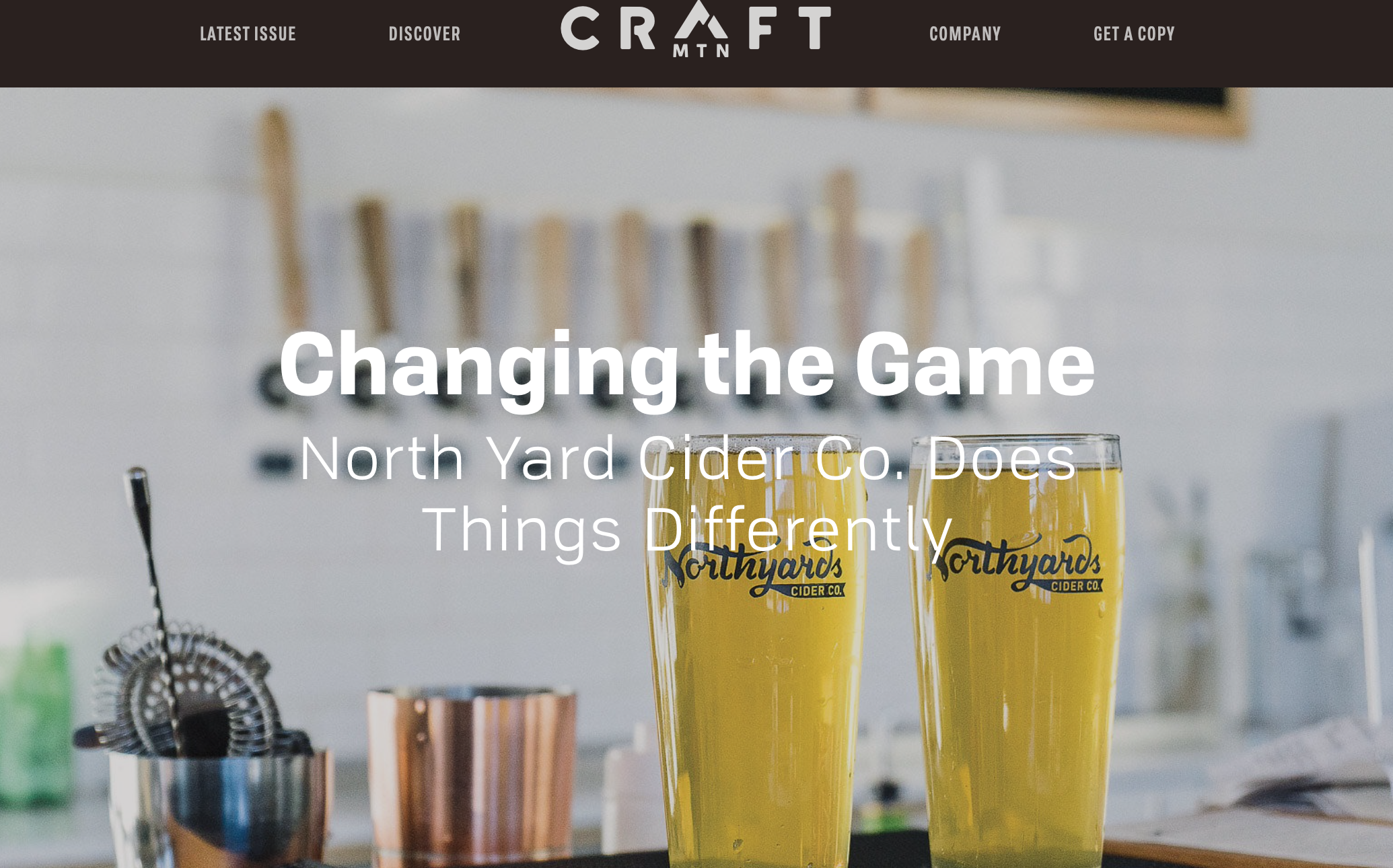

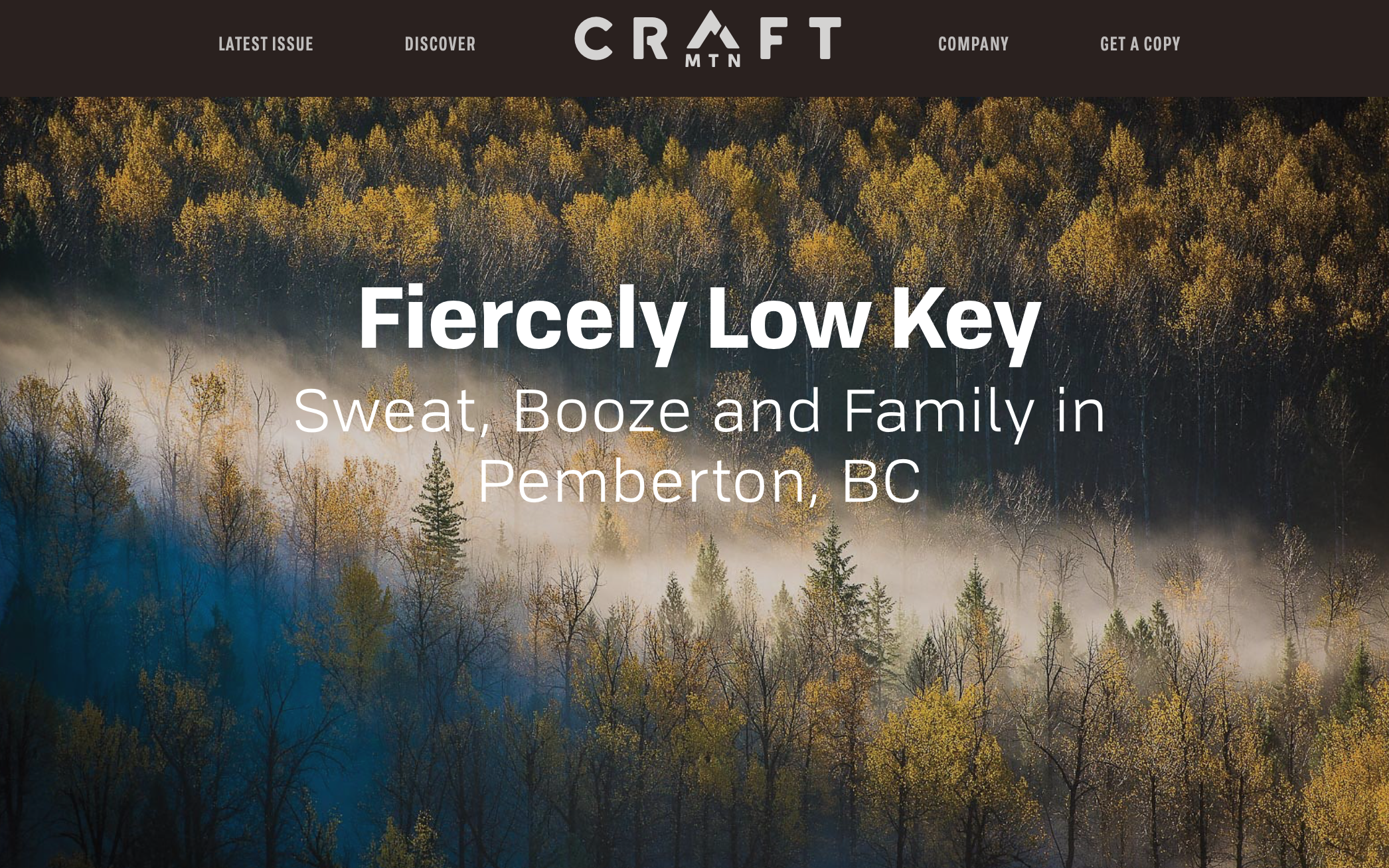
Yesterday, Craft MTN, a sweet little zine from the team at Freehub, wound down. It was an outlet that linked the people of Cascadia who shared a love for pedalling, and a place in which I was able to share about Pemberton’s Bike Club (a weekly women’s ride), the Schramm’s game-changing vodka distillery, Miller’s farm-to-tap brewing operation The Beer Farmers, North Yard Cider formerly in Squamish, and some bike-mad landscape architects.

I’ve been quietly lamenting, of late, the disappearance of my cultural niche in the media ecosystem, and so I feel an undertone of mourning, the toll of a bell in a distant neighbourhood, with this announcement. I worked for a long time in “mountain culture”, which I never seemed to be able to explain as a beat, outside certain regions (ie to urbanites and friends back home), but which pretty much encapsulated everything Sea to Sky, and in like-locations. It’s always good to find your ecological niche and to be able to express yourself within that. But monocultures have a way of encroaching on diversity, extracting the nourishment and leaving behind a bit of a wasteland (see Canadian prairies full of wild grasses become a devastated wheat belt, see Vail, see Rupert Murdoch, see hedge funds.) I think it’s what happens in a system when reciprocity isn’t practiced as a fundamental ethic – if you take, you also give back. If not, the extractive models of wealth-building just take and take and take, until they’ve drained the life force from their source, and then they are forced to move on.
There are those who are still fighting for those creative niches, independent media, custom publications – here in Sea to Sky country, Mountain Life is going strong. Mountain Gazette and Adventure Journal continue to carve out a space for the stories of a certain sensibility. But I wonder if we, as content consumers, are also part of the problem. We have become attention-bereft skimmers, chasers of the shiny thing, dopamine junkies.
I think back to a quote I posted here in 2010, from Seattle Weekly’s music blogger John Roderick ranting against Year-End Top 10 lists:
“The people making records are still spending months and years on them, while the people buying them are munching through them like corn chips. Slow down.”
The labour that goes into a print magazine, as far as I can see from my little peek through the mail slot, is huge. Hundreds of hours to create something you can hold in your hands, and sit with, and savour. But if 99% of our content-consumption involves multi-tabbing, multi-screening, constant swiping and endlessly scrolling, we will potentially approach that print artefact with the same rapacious appetite and accelerated heart rate and shallow chest-breath, and shrug and toss it in the recycling, and look up for the next shiny thing… The imbalance is too great to justify the effort and investment.
I’ve had moments of pondering what my personal response should be to the collapse of my cultural ecosystem – well, collapse might be melodramatic… let’s call it anorexia…. a dangerous thinning of what once felt robust, a system of events and festivals and showcases and businesses and brands and outlets, all sharing stories and reflecting back at each other what we represent, what makes us unique… Do you try and prop it up? Go work for the collapser? Do you run as far as you can? Hunker down? Bunker up? Do you start planting seeds for something else?
What’s coming up for me now is the same old prescription for most of my ailments: slow down. Learn to savour. Corral my own attention. Be able to sit still for long enough to read a long form article. Dock the phone. Read Oliver Burkeman’s 4000 weeks. Go outside a lot more. Live mountain culture. Sprinkle seeds. Trust compost. As long as things aren’t toxic, their demise fuels new growth.
 Lisa Richardson Bylines
Ah Lisa, how well I recognize this tristess.
Thanks for sharing that… It’s good to know it’s not just me. Shared sorrows are spared sorrows, or something like that?